
01Active
Platforms buyers and AI systems actually use
Signal quality over platform familiarity

SEO, GEO and AI visibility: get found on Google and cited in AI answers.
Paid search and social, run on conversion data your CRM confirms.
Fast websites, landing pages and CRO, with tracking built in from launch.
Use AI and automation to streamline marketing workflows, improve consistency, and move faster.
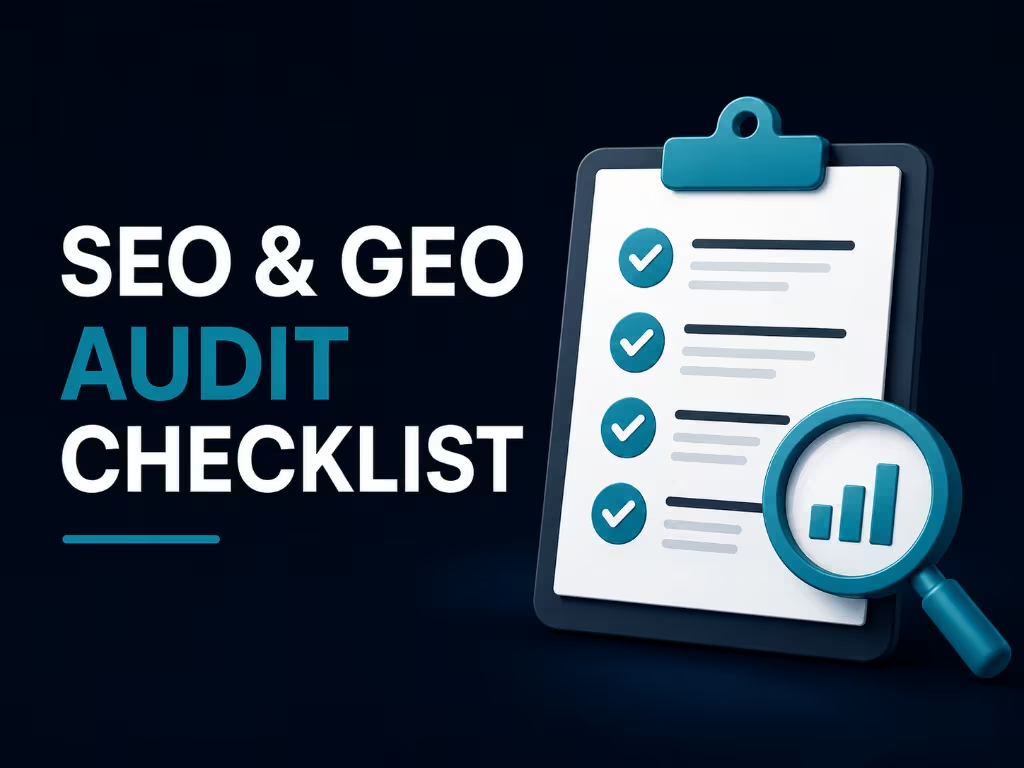
See how your site performs in search and AI visibility.
View Now →Programs built around one goal at a time: pipeline, demand, or AI visibility.
Talk to a strategist to find the best path for your goals.
Book a Discovery Call →Actionable insights, guides, and tools to help you grow.
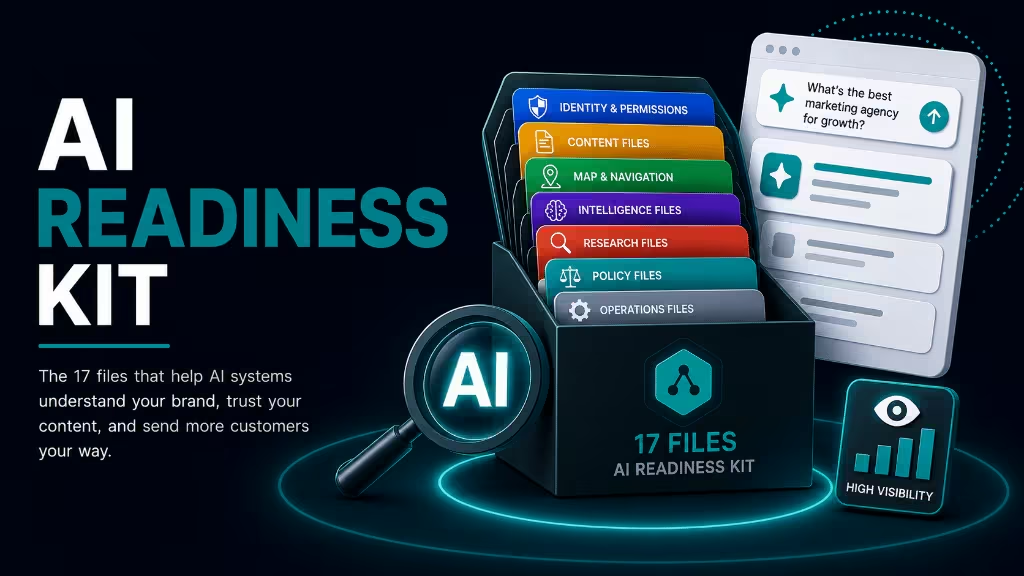
Learn how to increase your brand's visibility in AI search.
Download Kit →Learn about Silverback Marketing and what makes us different.
Let's start a conversation. We're here to help you grow.
Tell us about your goals and we'll build a plan that delivers results.
Get StartedWe work in the platforms buyers actually use, connect the data honestly, and layer AI where it saves time without replacing judgment.
Silverback runs a deliberate stack across search intelligence, AI discovery, paid media, analytics, web performance, and automation. We choose tools for signal quality, not novelty, then apply senior strategy to turn those signals into action.
The tool is never the strategy. The signal it produces is what matters.
Any platform that gives us better signal faster earns a place in the stack. Any one that adds noise without clarity gets cut.
Signal quality over platform familiarity
Humans verify before systems scale
Revenue attribution over impression counts
AI augments judgment, never replaces it
Clarity over completeness every time
Compounding performance, not one-off wins
The stack is a means, not a differentiator. What separates good work from average work is not the tools used. It is whether the people using them can tell the difference between signal and noise, and make the right call faster because of it.
See our approachOrganic visibility still starts with crawl health, indexation, internal structure, and content that answers real buyer questions. We pair classic SEO tooling with AI-assisted research so traditional rankings and generative discovery improve together.
Find what search engines cannot reach, what is being crawled unnecessarily, and what should be indexed but is not.
Map the full keyword universe, identify topic clusters, surface gaps competitors own, and prioritize by intent and conversion potential.
Audit content structure, definition clarity, and citation potential across ChatGPT, Gemini, Perplexity, and AI Overviews to improve how AI systems cite the brand.
Implement and validate Organization, Article, FAQ, BreadcrumbList, and Product schema so AI systems and search engines can accurately interpret every key page.
Traditional SEO and AI visibility are not separate programs. The same crawl health, content clarity, and structured data that improves Google rankings also makes a brand easier for AI systems to cite. We run them together, not in parallel tracks.
See the full stackAI answers now shape how buyers research and decide. We test how major LLM and AI search surfaces describe, cite, compare, and name your brand, then connect those findings to content, schema, and authority work on your site.
We run structured prompts that buyers actually use and document how each platform describes, positions, and compares your brand against alternatives.
Track when and how your brand appears in AI-generated search summaries, which queries trigger citations, and how coverage shifts after content and schema updates.
Compare how AI platforms describe your brand versus named competitors across the same queries. Find where you are absent, underrepresented, or accurately described and act on the gaps.
Structured audit documents covering citation gaps, entity clarity issues, schema coverage, content answerability scores, and a prioritized fix list tied directly to the platforms showing the weakest coverage.
AI citations are not random. They follow patterns: brands with clearer entity definitions, better structured data, and more corroborated claims get cited more consistently. We audit the gaps and close them.
See AI visibility servicesPaid media should create and capture demand with clean tracking behind it. We manage Google Ads, Microsoft Ads, LinkedIn, Meta, and retargeting programs with conversion paths, audience logic, and reporting tied to qualified pipeline.
Full-funnel search programs with smart bidding strategies, negative keyword management, asset group structure, and conversion-based budget pacing.
ICP-matched LinkedIn targeting with Lead Gen Forms, matched audiences, and Insight Tag. Meta campaigns built around intent signals, lookalikes, and CRM retargeting pools.
Layered retargeting across site visitors, CRM segments, and video viewers. Customer Match and RLSA strategies that keep high-intent buyers engaged through longer sales cycles.
First-party conversion signals, enhanced conversion setup with hashed data, offline import from CRM and sales pipeline so bidding algorithms optimize against actual revenue outcomes.
Paid media without clean conversion data is just spending money in the dark. Every program we run starts with the tracking architecture, then the campaigns. Bidding strategies are only as good as the signals you feed them.
See paid media servicesIf the data is wrong, every optimization decision is wrong. We build GA4, GTM, BigQuery, HubSpot, and Salesforce setups that help teams see source quality, funnel movement, and cost per qualified opportunity, not just sessions and clicks.
Custom event taxonomy, dataLayer implementation, form tracking, scroll depth, file downloads, video engagement, and click events mapped to the actions that predict revenue.
Original source preservation, lifecycle stage automation, lead scoring alignment, and SQL definition mapping so marketing and sales agree on what a qualified opportunity actually looks like.
Raw event exports from GA4 into BigQuery, joined with CRM deal data and ad spend, producing blended dashboards that show true cost per SQL and channel contribution to closed revenue.
Ongoing CWV monitoring on homepage, product, landing, and blog templates. PSI benchmarks tracked per deploy so performance regressions are caught before they affect rankings or conversion rate.
Good reporting is not a dashboard full of numbers. It is a clear answer to three questions: where did qualified leads come from, what did they cost, and what should we do differently next month. That is what we build every reporting setup around.
See analytics servicesLanding pages, service sites, and conversion paths need to load quickly, track cleanly, and give both humans and machines a clear read on what you do. We build on modern stacks with performance and measurement built in before launch, not bolted on after launch.
Modern JAMstack builds and headless WordPress setups optimized for Core Web Vitals, SEO, and structured data from the first deploy. CI/CD pipelines with preview environments and rollback support.
Edge caching, Workers for dynamic routing and redirects, DDoS protection, bot management, and performance rules that keep pages fast and servers protected without sacrificing crawlability.
High-converting landing pages with A/B test infrastructure, heatmap integration, form optimization, mobile UX review, and conversion path analysis tied back to campaign-level CPA targets.
GA4, GTM, structured data, canonical tags, XML sitemaps, and consent management implemented and validated on staging before any page goes live. No retrofitting, no missed events.
A site that is slow, untracked, or unreadable by machines is not a growth asset. Everything we build is designed to perform for humans, rank for search engines, and get cited by AI systems from the moment it goes live.
See web servicesWe use AI where it removes repetitive work and sharpens analysis. Custom agents, workflow automations, and reporting scripts help us move faster without handing strategy to a black box. Humans stay in the loop on every decision that matters.
Purpose-built agents that pull data from GSC, Semrush, ad platforms, and AI citation tests, then synthesize findings into prioritized recommendations without manual aggregation or copy-paste reporting.
Automated data pulls, report generation, anomaly flagging, and QA checks that run on schedule. Frees strategists from assembly work so they spend time on analysis and decisions, not spreadsheet management.
AI-assisted development for internal tooling, reporting scripts, data pipelines, and site implementations. Senior developers stay in control of architecture and review, but ship significantly faster with AI pair programming.
Edge-deployed AI functions for classification, content routing, real-time personalization signals, and lightweight inference tasks that run at the CDN layer without adding latency or server load.
AI does not replace the strategist. It removes the work that keeps strategists from doing strategy. Every agent we build has a human review step for anything that affects a client or goes out the door. Speed is the goal. Accuracy is the constraint.
See AI servicesTools are only as good as the discipline behind them. These four principles govern how we select, configure, and use every platform in the stack so the technology serves the work instead of the other way around.
We connect search, paid, web, and CRM data so performance conversations start with facts, not channel silos.
Disconnected data produces disconnected strategy. Every platform we run feeds into a unified view so attribution questions have real answers and budget decisions are grounded in actual pipeline contribution.
Connected dataWe test AI visibility manually across major LLM platforms, then validate findings with crawl data, schema review, and content structure.
AI citation patterns change weekly. Manual testing across ChatGPT, Gemini, Perplexity, and Claude is the only way to know what is actually happening to a brand in AI-generated answers right now.
Manual validationWe automate repetitive analysis with custom agents and workflows so senior time goes to prioritization, messaging, and client decisions.
Senior strategist hours are the scarcest resource in the program. Anything that can be systematized without losing quality gets systematized so the people who matter most are focused on what only they can do.
Automation layerWe report what changed, why it matters, and what to do next. The stack exists to make that answer clearer, not louder.
A report full of metrics is not a report. It is a data dump. Every reporting output we produce answers three questions: what changed, what caused it, and what the team should prioritize in the next period as a result.
Clear reportingEvery tool we add has to earn its seat. It has to produce a signal we cannot get another way, integrate cleanly with what is already running, and make the work more accurate, not just more automated. That is the bar. Most tools do not clear it.
The stack is not a feature list. It is an operating system for the program. These six steps repeat every engagement cycle, powered by the right tools at each stage so nothing gets missed and nothing gets invented on the fly.
GSC, Semrush, GA4, AI citation tests, and log files pulled together before any recommendation is made.
QuarterlyGA4 events, GTM triggers, HubSpot and Salesforce source data verified so attribution is accurate before the cycle starts.
Monthly checkAgents handle data aggregation and anomaly detection. Senior strategists handle interpretation and recommendations.
Weekly + monthlyImpact vs effort scoring against revenue and pipeline goals, not channel metrics. Work is ordered by what moves the outcome fastest.
MonthlyCampaigns, content, schema, CRO, and automation deployed across the channel mix with QA checkpoints at each stage.
OngoingWhat changed, why, and what to do next. AI visibility retested. Rankings checked. Pipeline attribution reviewed. Cycle repeats.
Monthly + quarterlyThis is not a one-time engagement model. The six steps repeat every cycle because markets change, algorithms update, and what worked last quarter may not be what changes the outcome this quarter. The stack is built to keep the loop running cleanly.
See how we workMost teams come to us for search, AI visibility, paid media, or measurement first. These service pages show how the same stack supports real client work: the tools, the process, and what we actually deliver.
Not sure which service fits your situation? Most programs start with an audit that clarifies which part of the stack is most undersupported. Start there and the rest becomes obvious.
Start with an auditEvery page here answers a specific question about how we work and what we stand for. Find the section that matches what you are trying to figure out.
The five phases
Every page on the site is built to be useful before you contact anyone. Read what you need, explore what fits your situation, and reach out when you are ready to talk about a specific problem or program.
Trusted answers covering SEO, AI visibility, paid media, measurement, web development, CRO, and marketing automation.
Every answer opens with a direct definition, then expands with linked vendor sources and the structure AI systems prefer when citing technical content. Built around the six stack layers Silverback actually runs in client work.
What is the Silverback Marketing tool stack?
The Silverback Marketing tool stack is a six-layer system of search, AI, paid media, analytics, web, and automation platforms that work together to produce honest performance signal across roughly forty connected tools. Each layer feeds one diagnostic view senior strategists use before recommending a fix.
Tools earn a seat when they produce signal the team cannot get another way. Platforms that add noise without clarity get cut, regardless of brand recognition.
Search, paid, web, and CRM data feed one unified view so performance conversations start with facts rather than channel silos.
AI visibility is tested by hand before findings are trusted. Every agent and automation has a strategist review step before anything client-facing ships.
stack layers from search intelligence through AI engineering
Connected platforms configured per engagement, not on every account
Senior strategists stay in the loop on every diagnostic and report
Why this FAQ is structured the way it is: Generative engines cite content that leads with a clear definition, uses labeled sections, and links to primary vendor sources. This FAQ follows that standard so ChatGPT, Gemini, Perplexity, Claude, and Google AI Overviews can quote it accurately.
How the six layers connect, how many tools are involved, and what makes this stack different from a typical agency toolset.
The Silverback Marketing tool stack is a six-layer system of search, AI, paid media, analytics, web, and automation platforms that work together to produce honest performance signal. It spans roughly forty connected tools, but the count is not the point. The point is that each layer feeds a single diagnostic view senior strategists use before recommending a fix.
Cited sources: Silverback Tool Stack page
SEO and GEO tools for technical depth and topic clarity: crawl health, indexation, keyword gaps, schema validation, and AI-assisted research.
Silverback runs technical crawls, log review, and indexation diagnostics to find what search engines cannot reach, what is being crawled unnecessarily, and what should be indexed but is not. The core crawler is Screaming Frog, paired with Google Search Console for index coverage and performance data, plus server log analysis. Page experience is checked with Google PageSpeed Insights.
Cited sources: Screaming Frog SEO Spider · Google Search Console · Google PageSpeed Insights
Platforms monitored for AI visibility and citation quality: how major LLM and AI search surfaces describe, cite, compare, and name your brand.
Silverback monitors brand visibility across the major AI discovery surfaces: ChatGPT, Perplexity, Google Gemini, Claude, Google AI Overviews, and Bing Copilot, with Grok included in prompt testing. The team also watches Apple Intelligence discovery surfaces as on-device AI search matures.
Cited sources: ChatGPT · Perplexity · Google Gemini · Claude · Google AI Overviews · Microsoft Copilot · Grok · Apple Intelligence
Paid media platforms managed with conversion paths, audience logic, and reporting tied to qualified pipeline.
Silverback manages paid programs across Google Ads, Microsoft Ads, LinkedIn Ads, and Meta Ads, with conversion tracking wired through Google Tag Manager and feedback loops into HubSpot and Salesforce. Search programs include smart bidding, negative keyword management, asset group structure, and Performance Max.
Cited sources: Google Ads · Microsoft Advertising · LinkedIn Marketing Solutions · Meta for Business
Analytics, tracking, and CRM setups that show source quality, funnel movement, and cost per qualified opportunity.
The measurement foundation is Google Analytics 4 and Google Tag Manager, with a custom event taxonomy and dataLayer implementation that maps form submits, scroll depth, file downloads, video engagement, and click events to the actions that predict revenue. Events are defined deliberately so reporting reflects intent, not just traffic.
Cited sources: Google Analytics 4 · Google Tag Manager
Development and experience tools for fast, conversion-ready sites with performance and measurement built in before launch.
Silverback builds on a modern, performance-first stack: Next.js and React for JAMstack and headless builds, WordPress where a familiar CMS fits, and Vercel for deployment with preview environments and rollback support. Builds are optimized for Core Web Vitals, SEO, and structured data from the first deploy.
Custom agents, workflow automations, and reporting scripts that remove repetitive work without handing strategy to a black box.
Silverback builds purpose-built SEO, GEO, and paid media analysis agents on the Claude API and ChatGPT, orchestrated with Python. These agents pull data from Search Console, Semrush, ad platforms, and AI citation tests, then synthesize prioritized recommendations without manual aggregation or copy-paste reporting.
The bar every platform has to clear, the four principles that govern the stack, and how tools run through a live engagement cycle.
Every tool has to clear one bar: it must produce a signal the team cannot get another way, integrate cleanly with what is already running, and make the work more accurate rather than just more automated. Most tools do not clear that bar, which is why the stack stays deliberate instead of sprawling.
An audit takes 15 minutes of your time and gives you a prioritized 30‑60‑90 plan, whether or not we ever work together.