
Audit Foundation
1–2: Crawlability, indexation, technical performance, and Core Web Vitals


SEO, GEO and AI visibility: get found on Google and cited in AI answers.
Paid search and social, run on conversion data your CRM confirms.
Fast websites, landing pages and CRO, with tracking built in from launch.
Use AI and automation to streamline marketing workflows, improve consistency, and move faster.

See how your site performs in search and AI visibility.
View Now →Programs built around one goal at a time: pipeline, demand, or AI visibility.

Talk to a strategist to find the best path for your goals.
Book a Discovery Call →Actionable insights, guides, and tools to help you grow.
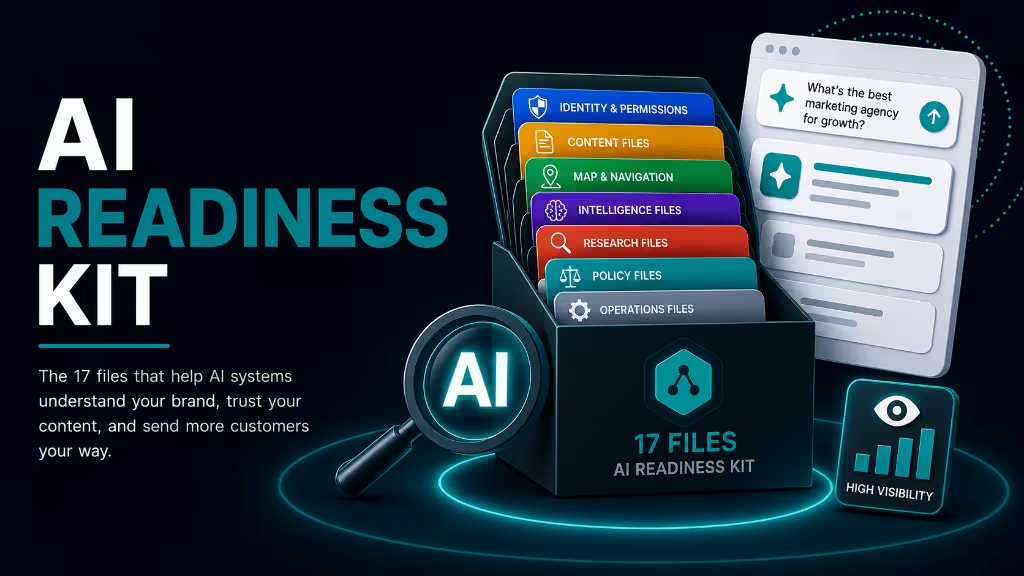
Learn how to increase your brand's visibility in AI search.
Download Kit →Learn about Silverback Marketing and what makes us different.
Let's start a conversation. We're here to help you grow.
Tell us about your goals and we'll build a plan that delivers results.
Get StartedKnow exactly where you stand in search and AI answers. This interactive 2026 checklist walks through 88 audit items across crawlability, content, schema, entity signals, AI citation readiness, authority, and action planning, with progress you can track as you go.
Run this as a structured discovery process, not a pass/fail test. Every site has a different mix of strengths and gaps. The goal is to find the gaps that are costing the most and fix those first.
Assign a named owner for each section before the audit begins. An audit without owners produces a report that nobody acts on. Accountability starts at section assignment.
Treat the GEO and SEO sections as one unified workflow. The technical and content fundamentals that earn organic rankings are the same fundamentals that earn AI citations. Optimizing for one without the other is leaving performance on the table.
Complete the full audit before prioritizing fixes. Section 11 exists for a reason. Issues look different once the complete picture is visible. A single critical finding can change the priority order of everything else.
Collaboration notesThis audit is a starting point, not a finished product. Every finding should be validated against the client's business context before being prioritized. A technically correct recommendation that ignores operational constraints will not get implemented. Silverback reviews technical findings, content gaps, entity signals, schema implementation, and AI citation data before finalizing the action plan. Client sign-off on priority tiers prevents misaligned sprint planning. The client team should flag business-critical pages, conversion paths, and brand narrative sensitivities before the audit findings are presented. Context the audit cannot see from the outside materially changes what gets prioritized. Development, content, and marketing teams should align on the fix sprint plan before work begins. Audit findings that reach only one team rarely produce the cross-functional improvements that move organic and AI visibility in parallel.
1–2: Crawlability, indexation, technical performance, and Core Web Vitals
3–5: On-page quality, content architecture, and structured data implementation
6–8: Entity signals, AI readiness, and cross-platform citation monitoring
9–11: Off-page authority, analytics baseline, and prioritized action planning
Section noteNote on Tools: Use Google Search Console CrUX field data as your primary source for Core Web Vitals. Lab data from PageSpeed Insights is useful for diagnosis but does not reflect real-user experience the way field data does. Always segment CWV by page template, not site-level averages.
Section noteNote on Scope: GEO and SEO are not separate disciplines. The technical and content fundamentals that earn organic rankings also determine AI citation eligibility. This section identifies the signals that specifically influence generative engine behavior in addition to traditional search ranking.
Indexation blocking, robots.txt blocking AI crawlers, broken schema sitewide, GA4 tracking failure, Google manual action.
Address within 48 hours. These issues are actively suppressing visibility while the audit conversation is happening.
Core Web Vitals failures across key templates, content serving wrong search intent, Organization schema errors, zero AI platform citations on primary queries.
Address within two weeks. These represent meaningful organic and GEO underperformance with measurable revenue impact.
Meta description gaps, internal link orphans, missing FAQPage schema, unlinked brand mentions, content freshness issues in secondary categories.
Address within 30 to 60 days. Prioritize by traffic volume and conversion proximity.
Anchor text refinements, cosmetic alt text improvements, secondary author entity development, monitoring dashboard configuration.
Schedule into ongoing quarterly maintenance. These compound over time but rarely drive short-term ranking changes.
** Screaming Frog SEO Spider, Sitebulb, or Lumar for enterprise JavaScript-heavy sites.
** Google Search Console CrUX report, PageSpeed Insights for field and lab data, Chrome DevTools for diagnosis.
** Google Rich Results Test, Schema.org Markup Validator.
** Ahrefs, Semrush, or Majestic for link profile and competitor gap analysis.
** Brand24, Mention, or Ahrefs Alerts for unlinked mention tracking.
** Profound, Otterly, SE Ranking AI Overview tracker, or a structured manual query log across ChatGPT, Perplexity, Gemini, Claude, and Google AI Overviews.
** Google Analytics 4 with a configured GA4 channel group for AI referral traffic, plus Google Search Console as the primary indexation and query source.
Silverback runs the full checklist and returns a prioritized, owner-assigned action plan.
Request an auditTechnical SEO, content architecture, schema, entity signals, and AI citation strategy in one program.
View SEO / GEOCitation monitoring, llms.txt, answer-style content, and GEO readiness built on audit findings.
View AI visibilityPair this checklist with developer-ready P1–P4 fixes for crawl, CWV, schema, and rendering issues.
View priority matrixWork through the checklist above, then download a markdown or branded PDF report with your score, grade, and item-by-item status to share with stakeholders.
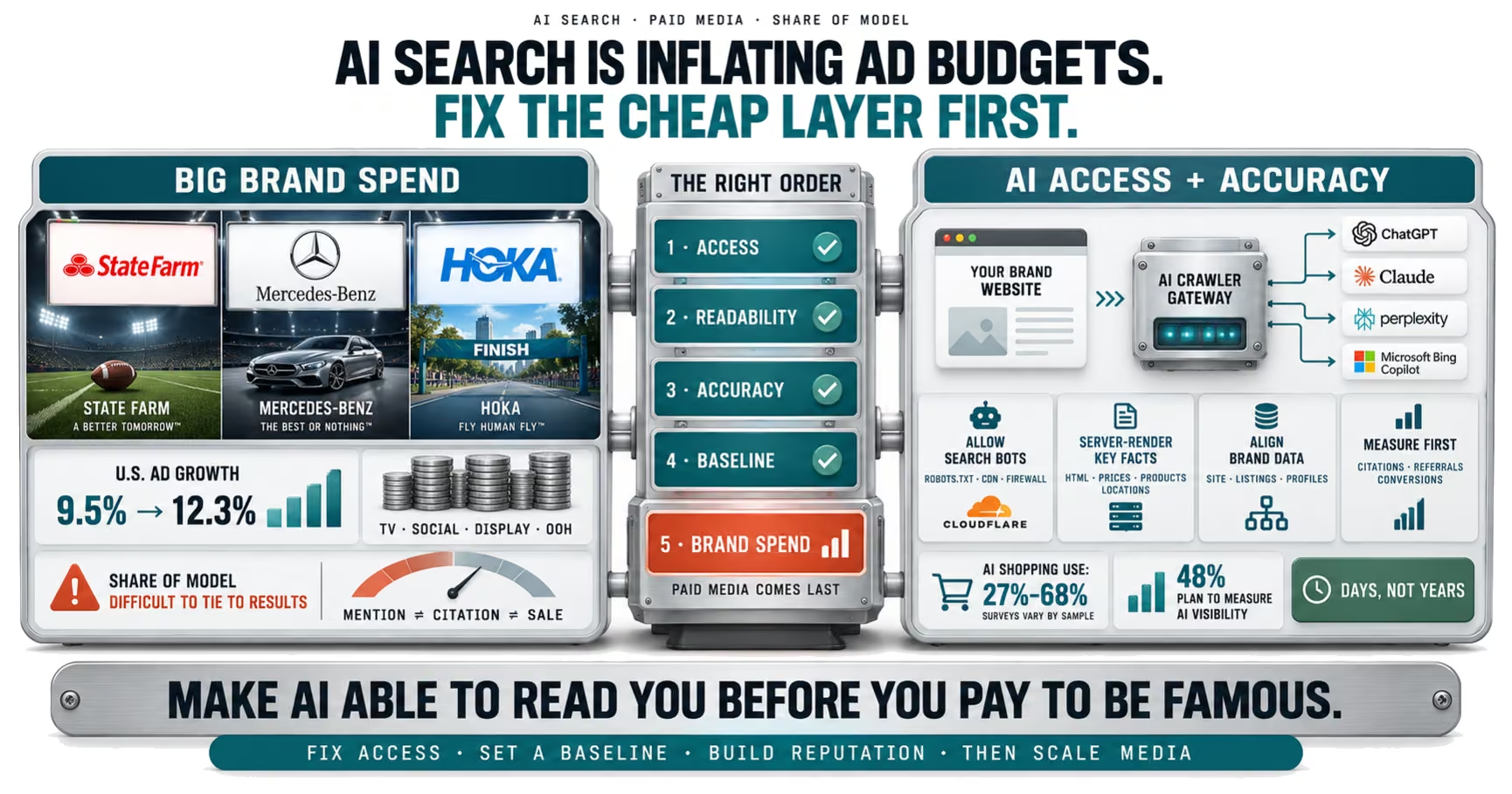

State Farm, Mercedes-Benz and Hoka are spending on brand partly to win AI answers. Why share of model is hard to measure, and the fix to do first.
Read now →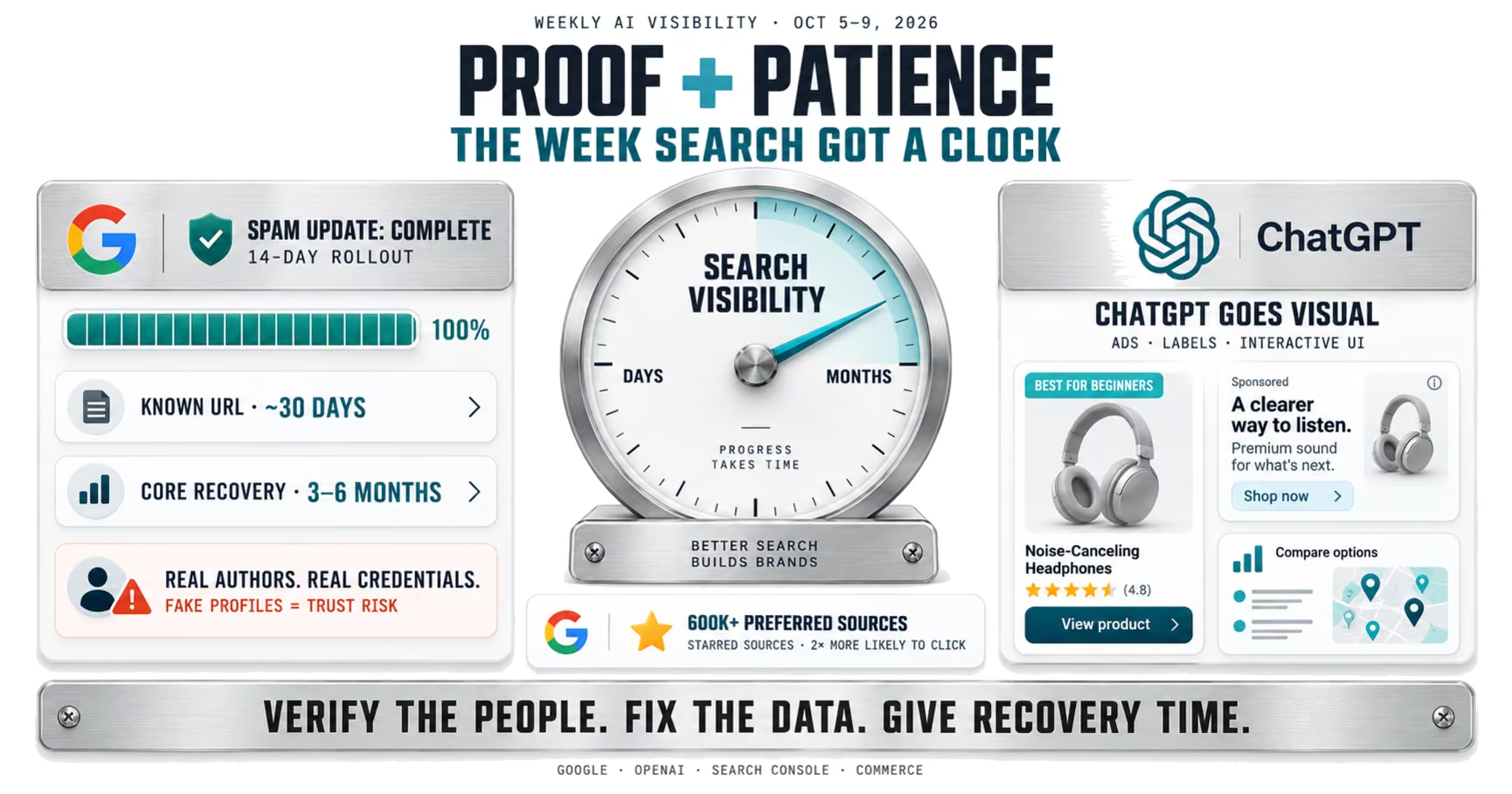

Google's spam update finished after 14 days, Google published crawl and recovery timelines, and ChatGPT added visual ads, labels and a new interface.
Read now →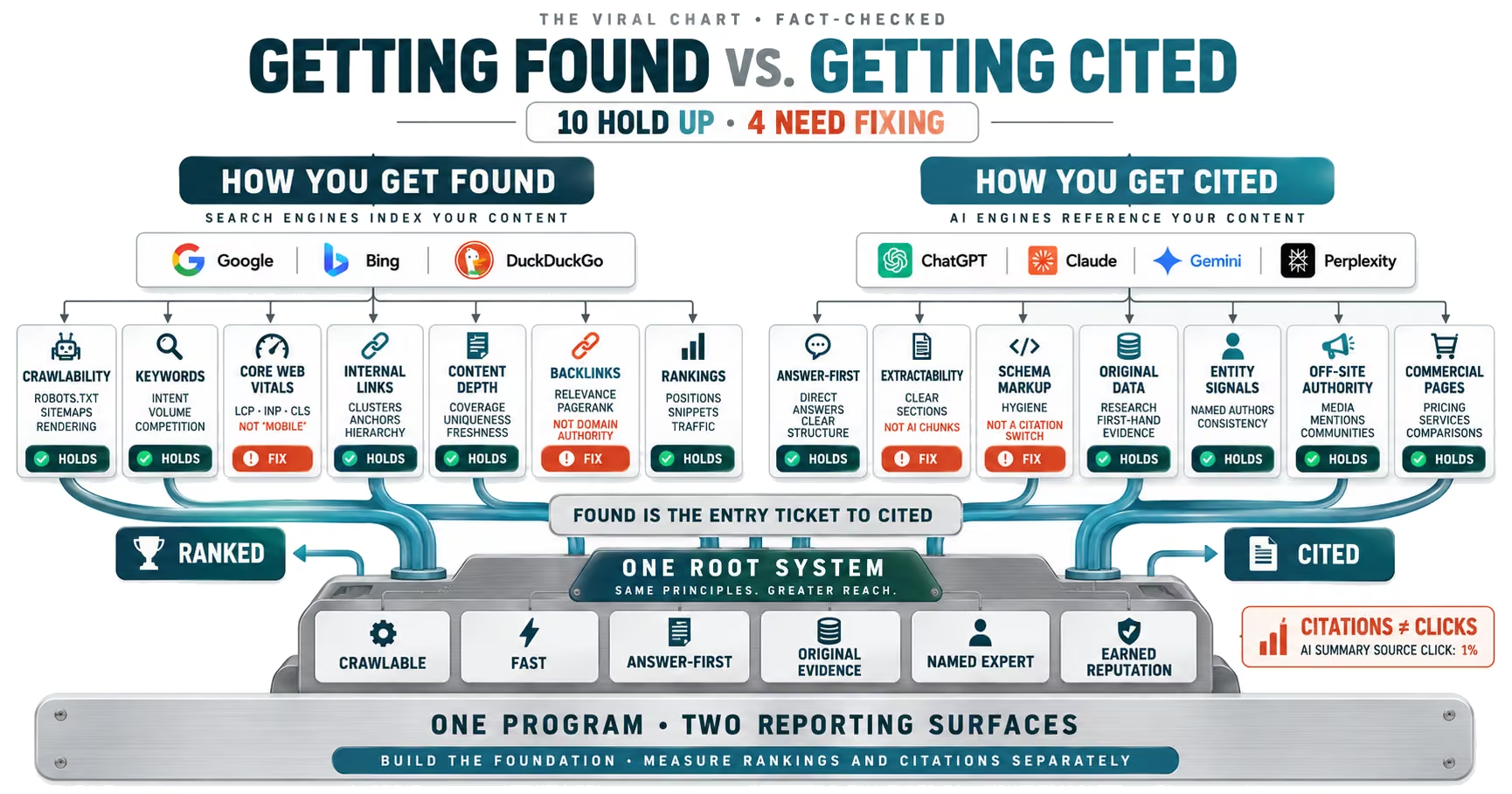
A viral chart splits SEO and AI citations into 14 boxes. We checked each one against Google, OpenAI and the research. Ten hold up. Four need fixing.
Read now →An audit takes 15 minutes of your time and gives you a prioritized 30‑60‑90 plan, whether or not we ever work together.