



 Preferred source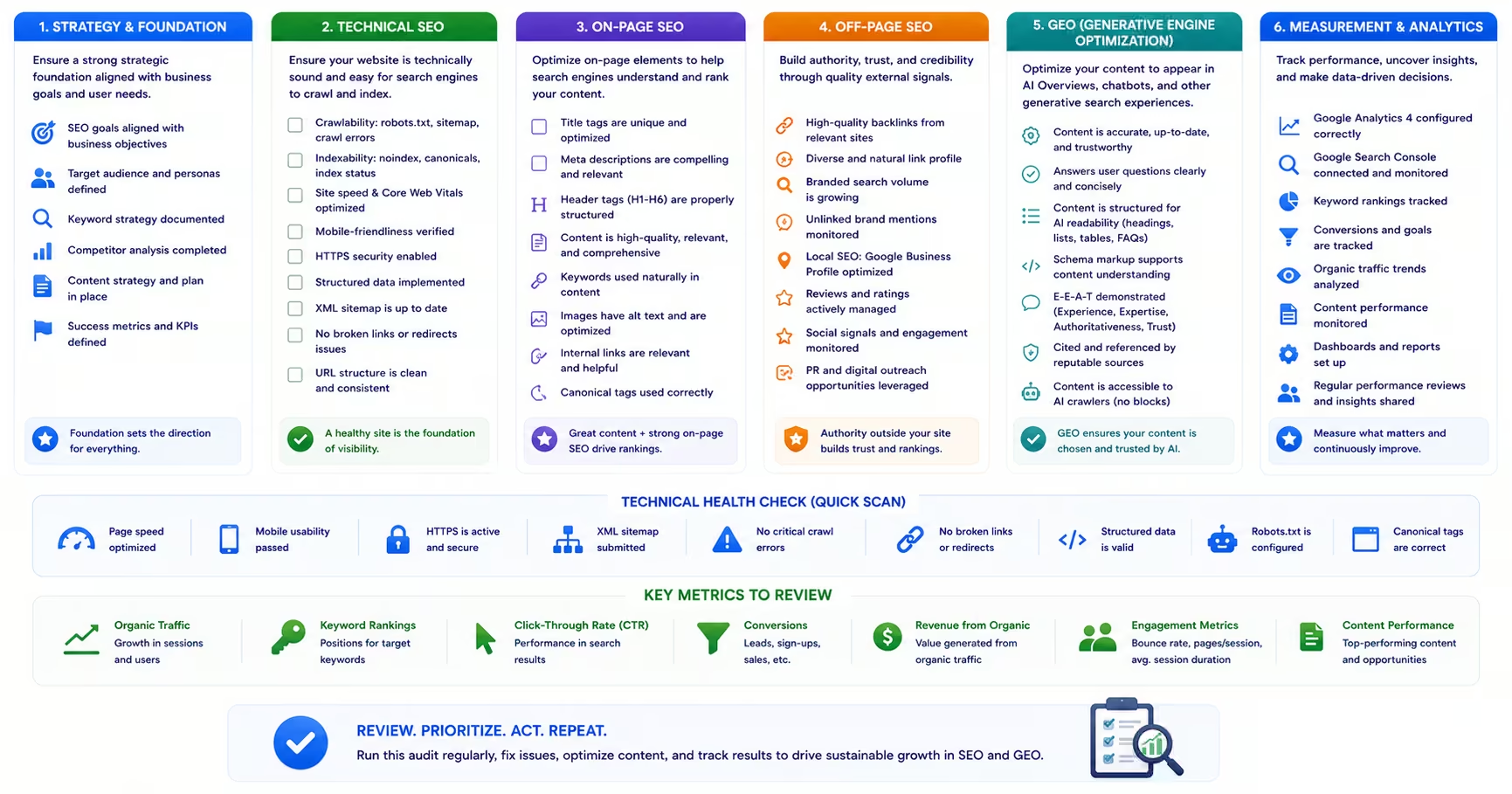
Most marketing teams still treat SEO audits and GEO audits as separate projects. One team runs a technical crawl. Another runs AI prompt tests. The spreadsheet fills up, but nothing gets fixed in the right order. That split creates blind spots. A page can rank in traditional results and still never earn a citation in an AI answer. A page can be written for AI extraction and still fail because crawlers cannot index it or because the schema contradicts the visible content.
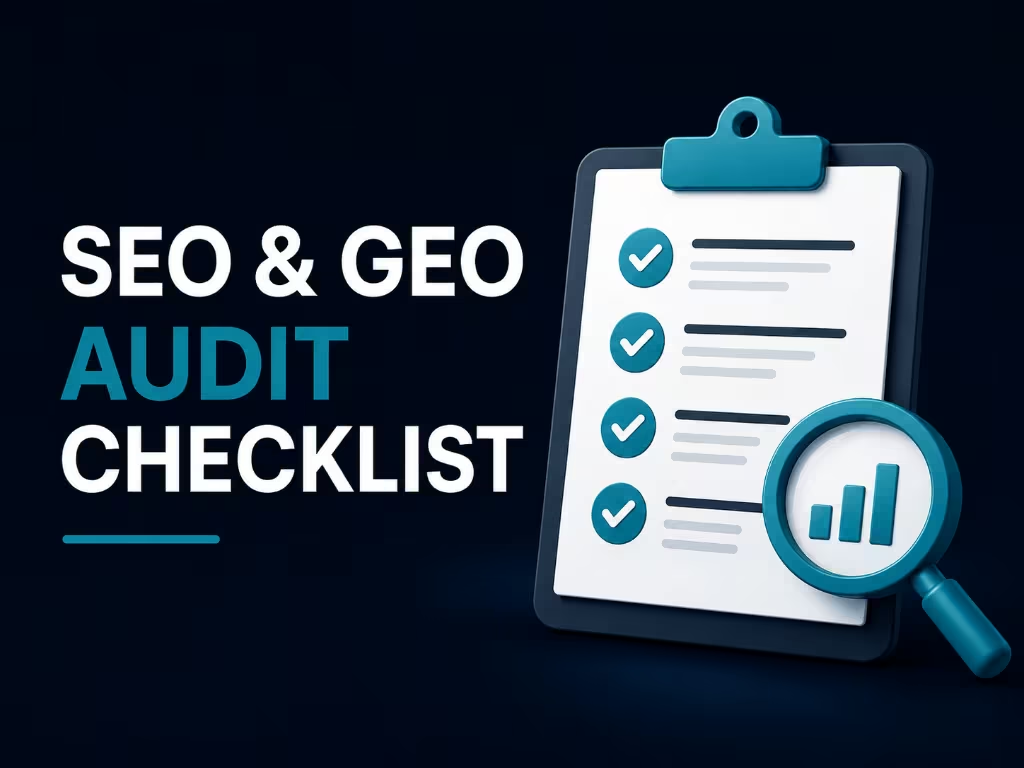
An effective audit covers both surfaces with one prioritized list. SEO answers whether search engines can find, understand, and rank your pages. GEO answers whether those pages are clear, credible, and structured enough to be quoted when an AI system synthesizes an answer. Use our SEO & GEO Audit Interactive Checklist to track progress item by item, or keep reading this guide for the full walkthrough.
Define Priority Pages and Success Criteria
Before you open a crawler, decide which URLs actually matter. Pick revenue pages, category leaders, flagship service pages, and the informational content that feeds them. For each URL, write down the primary query intent, the conversion action, and what "good" looks like in both search and AI contexts (rankings, traffic, citations, or branded mentions).
Run a short baseline manually. Search your priority topics in Google and note whether AI Overviews appear. Query the same topics in the AI tools your buyers use and record whether your brand is cited, which competitors appear, and whether the cited pages match the URLs you expected. This baseline turns a vague "we need more AI visibility" goal into specific gaps you can retest after fixes ship.
The SEO foundation covers crawl, index, and render
Start with access. Review robots.txt to confirm you are not blocking important paths, CSS, or JavaScript that search systems need to render pages correctly. In Google Search Console, check index coverage for excluded URLs, soft 404s, redirect chains, and "crawled, currently not indexed" patterns on priority pages.
Validate canonicals on templates that generate duplicates: parameters, pagination, filtered views, and trailing slash variants. Google's canonicalization guidance is clear that consistent canonical signals reduce confusion about which URL should represent a piece of content. Confirm your XML sitemap lists indexable URLs only and that recent priority pages are included.
Fetch a sample of priority URLs with JavaScript disabled or via view-source checks. Core headings, body copy, and FAQ text should appear in the initial HTML response. If primary content loads only after client-side rendering, some crawlers and AI systems may see an incomplete page even when users see the full experience in a browser.
Page Experience and Core Web Vitals
Page experience remains a ranking consideration, and slow or unstable pages hurt conversion even when rankings hold. Review Core Web Vitals field data in Search Console for mobile and desktop. Focus first on URLs with meaningful traffic or strategic importance.
Largest Contentful Paint should stay under 2.5 seconds for a good experience. Interaction to Next Paint should stay under 200 milliseconds. Cumulative Layout Shift should stay under 0.1. Common fixes include compressing hero images, deferring non-critical scripts, eliminating layout shift from ads and embeds, and improving server response times on template-heavy pages. Fix experience issues on money pages before polishing long-tail blog posts.
Content Quality, Intent, and E-E-A-T
Technical health does not rescue weak content. Audit priority pages against Google's helpful content standards: clear purpose, original insight, evidence of expertise, and satisfaction of the query that brought someone to the page. Flag thin pages, outdated statistics, generic copy that could apply to any competitor, and pages that bury the answer below long introductions.
Map each priority URL to search intent (informational, commercial, transactional). Informational pages should answer the question directly in the first few paragraphs. Commercial pages should make the offer, proof, and next step obvious above the fold. If the page targets a question people ask in AI tools, the opening should state a direct answer a system could quote without surrounding fluff.
Check authorship and trust signals on content that claims expertise: named authors, role credentials, updated dates, sourcing for non-obvious claims, and links to primary references. AI systems and search quality evaluators both reward pages that show who wrote the content and why they are credible on the topic. For a deeper treatment, read why E-E-A-T matters more in AI search.
Structured Data and Machine Readability
Audit structured data on templates, not just individual URLs. Confirm Organization, WebPage, Article or BlogPosting, FAQPage, BreadcrumbList, and Service or Product markup where appropriate. Our article on why structured data matters for AI search explains which types matter most.
Schema must match visible content. FAQ markup should reflect questions and answers users can read on the page. Article dates and authors should align with bylines. Incorrect schema is worse than missing schema because it trains systems to distrust the page. For blog and resource content, treat FAQ and Article markup as part of the publishing workflow, not a one-time developer task.
The GEO layer is citation readiness
GEO checks ask a different question: if an AI system reads this page, would it confidently cite a specific passage? Review priority content for extractable structure: question-based H2s, short paragraphs, explicit definitions, numbered steps where relevant, and tables or lists that compare options clearly.
Lead sections with declarative answers. If someone asks "what is X" or "how do I Y," the first paragraph under the relevant heading should answer in plain language. Support claims with inline links to authoritative sources. Pages that cite Google Search Central documentation, standards bodies, or primary research are easier for both humans and machines to trust than pages that assert facts without sources.
Review snippet controls carefully. Overly aggressive nosnippet or preview restrictions can limit how content appears in snippet-driven surfaces, including some AI experiences described in Google's AI features documentation. Apply restrictions only where you have a deliberate reason, not by default on educational content you want discovered.
Confirm brand entity clarity: consistent organization name, logo, contact data, and sameAs links to official profiles in Organization schema. AI systems lean on entity signals when deciding whether to attribute a claim to your brand versus a competitor with a similar name.
Internal Linking and Topical Authority
GEO visibility correlates with how coherently a site covers a topic, not just how polished one page reads. Audit internal links on priority clusters: pillar pages, supporting articles, service pages, and FAQ content should connect with descriptive anchor text. See how internal linking supports SEO and AI visibility for cluster patterns that earn citations.
Compare your cluster to competitors cited in AI answers on your target queries. If competitors earn citations with a tight web of related content and you publish isolated articles, your audit should include a plan to connect and expand the cluster before you rewrite individual paragraphs.
Measurement and Audit Cadence
Document findings in four buckets: blockers (fix this week), high impact (fix this month), optimizations (schedule), and monitoring (watch). Tie each item to an owner and a retest date. After fixes ship, rerun indexation checks in Search Console, rerun schema validation, and repeat your manual AI citation baseline on the same query set.
Quarterly full audits work for most sites. Run an additional pass after CMS migrations, redesigns, domain changes, or major template updates. Monthly, spot-check priority URLs for index status, schema errors, and citation movement on your highest-value topics.
What Good Looks Like When You Are Done
A completed SEO and GEO audit does not produce a 40-tab spreadsheet nobody opens. It produces a short ranked list: what is broken, what is missing, and what to validate after deploy. Search visibility and AI citation both reward the same underlying discipline: pages that load reliably, say something useful, prove it clearly, and connect to the rest of your site in ways humans and machines can follow.
If your team is starting from scratch, run this checklist on your top ten URLs first. Fix blockers, tighten the opening answers on informational pages, validate schema on those templates, and retest citations. That focused pass beats a site-wide audit that never reaches implementation.
Frequently Asked Questions
Common questions about GEO, SEO, and AI-driven search visibility.
An SEO audit checks whether search engines can crawl, index, and rank your pages in traditional results. A GEO audit checks whether your content is structured and trustworthy enough to be cited in AI-generated answers. You need both because ranking and citation are related but not identical.
Run a full audit quarterly for most marketing sites. Monthly spot checks make sense after major releases, migrations, or template changes. High-priority revenue pages deserve a lighter citation and indexation review each month.
Start with one combined checklist. Most GEO gaps show up as content, schema, or trust problems that also hurt SEO. Platform-specific citation tracking comes later, after the foundation is solid.
Fix blockers first: indexation errors, accidental noindex tags, broken redirects, and pages that fail to render core content. Then address content clarity, internal linking, and schema on priority URLs before chasing cosmetic page tweaks.
Google uses structured data to understand page content and power rich results and AI features. Accurate JSON-LD will not replace weak content, but missing or incorrect schema makes it harder for systems to interpret what your pages actually say.
You can, but the ROI is low. Pages that are not crawlable, indexable, or helpful rarely earn AI citations. Build the SEO foundation first, then layer GEO checks for answer format, sourcing, and entity clarity.
Google Search Console is the baseline for indexation and performance. Add a site crawler for technical issues, PageSpeed Insights or Lighthouse for Core Web Vitals, the Rich Results Test for schema, and manual queries in Google and AI tools to see whether your brand is cited on priority topics.
Sources
- Google Search Central: AI features and your website (opens in a new tab)
- Google Search Central: Creating helpful, reliable, people-first content (opens in a new tab)
- Google Search Central: Intro to structured data (opens in a new tab)
- Google Search Central: Core Web Vitals (opens in a new tab)
- Google Search Central: Page experience (opens in a new tab)
- Google Search Central: Robots.txt introduction (opens in a new tab)
- Google Search Central: Canonicalization (opens in a new tab)
- Google Search Central: Sitemaps overview (opens in a new tab)
- Google Rich Results Test (opens in a new tab)
- Google Search Console (opens in a new tab)