




SEO Reporting Metrics Executives Actually Care About
 Preferred source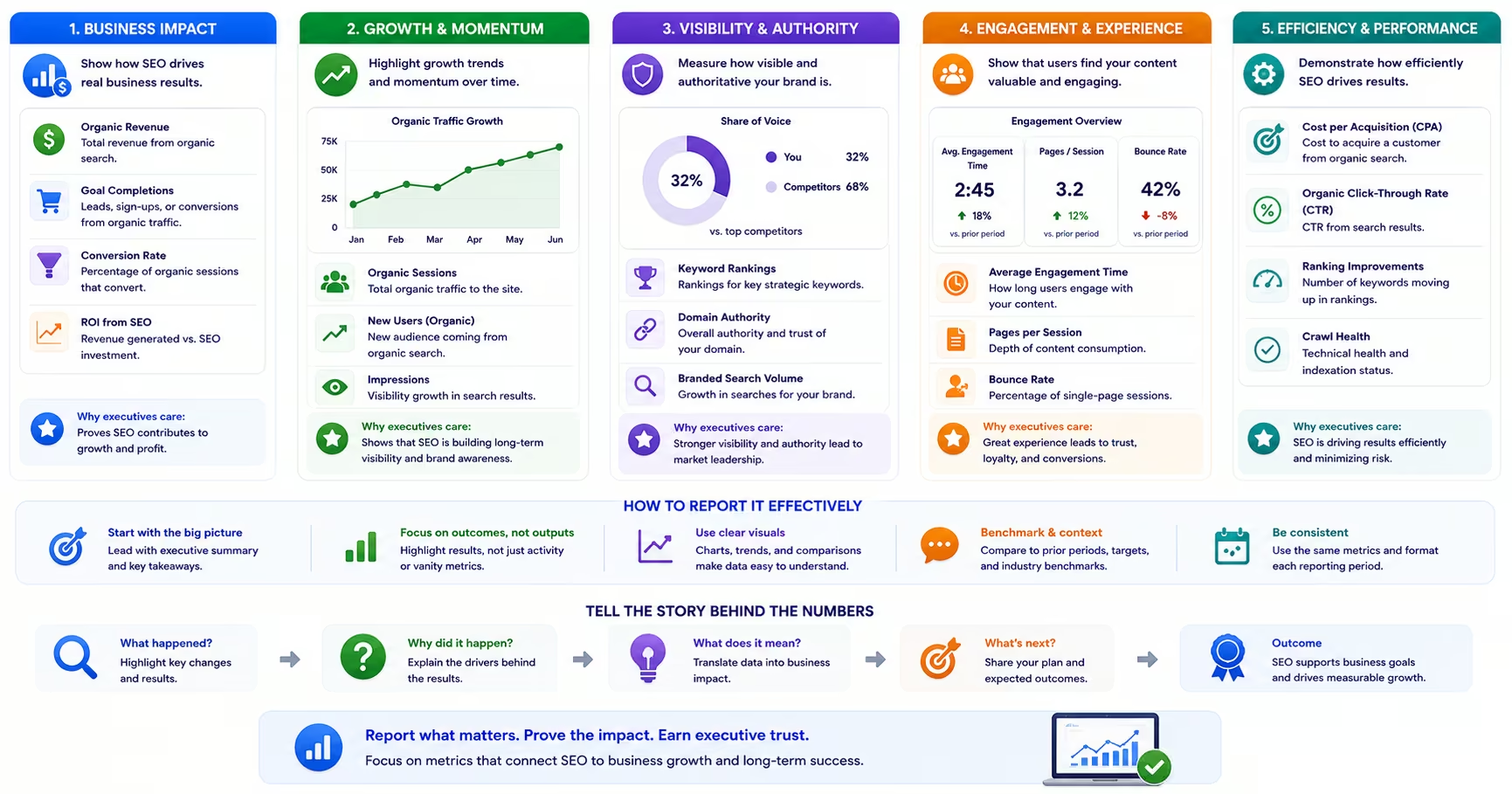
Every SEO team has experienced some version of the same meeting. You present a ranking report showing that fifteen keywords moved up in position, traffic is trending in the right direction, and you've published a solid volume of content this quarter. The executive in the room nods politely and asks: "But what did it do for revenue?" You don't have a clean answer, and the meeting ends with a vague commitment to connect the dots better next time.
The problem is not that SEO doesn't drive revenue. It usually does, often substantially. The problem is that the default metrics, keyword rankings, organic sessions and domain authority, are not the language executives use to judge a business. This article covers three things: which metrics matter to decision-makers, how to frame SEO in boardroom terms, and what a useful executive report looks like. Our SEO reporting for executives template is built for exactly that conversation.
The Vanity Metric Problem
Keyword rankings feel important because they are tangible and competitive. Watching your page climb from position eight to position three for a target keyword is gratifying, and it is a useful signal for SEO practitioners managing day-to-day optimization. But rankings do not tell an executive whether the SEO program is worth its cost. A brand can rank first for dozens of keywords that its target customers never search, and generate zero business value from those rankings.
Domain authority has the same problem. It is a useful proxy for comparing competitors inside keyword research tools. It is not a Google metric, it does not track revenue reliably, and it moves for reasons that have nothing to do with your program. Put it in an executive report and you invite skepticism. The first follow-up question reveals it is a third-party estimate, not a Google measurement.
Executive buy-in starts with dropping these vanity metrics from reporting. Replace them with outcomes executives already understand: revenue, qualified leads, cost per acquisition, and market share. SEO and GEO reporting should tell that story, not just rank movement.
Revenue contribution is the metric that earns budget
For e-commerce, organic revenue attribution is straightforward. Google Analytics or your analytics platform can report revenue from organic sessions by product category, landing page, and conversion type. Lead the executive report with organic revenue, trended over the prior twelve months so growth and seasonality both show.
For B2B and lead generation, the path from organic visit to closed revenue needs a full attribution model. Track organic leads through to CRM-qualified opportunities and closed deals. That means connecting web analytics to your CRM and, ideally, adding offline conversion tracking so deals that close by phone or email after an organic visit still count. The payoff is credibility. You answer the revenue question directly instead of inferring it from traffic trends.
Qualified Lead Volume and Conversion Rates
For lead generation businesses, the highest-value SEO metric below revenue is qualified lead volume from organic search. Not all organic traffic is created equal. A spike in informational blog traffic can help brand awareness and AI citation authority. It is not the same as more organic leads from pages that target commercial queries. Reporting total traffic growth without segmenting by quality blurs the two.
Report qualified leads from organic search separately from total organic traffic, and include the organic lead-to-close rate if your CRM data supports it. Organic leads often close at a higher rate than paid leads, and that is a strong argument for continued investment. Executives understand conversion rates. "Our organic leads close at a 30% higher rate than paid, at a fraction of the cost per acquisition" lands. "We moved up twelve keyword positions" does not.
Cost Per Acquisition from Organic vs. Paid
Comparing cost per acquired customer from organic search with the paid equivalent is one of the most persuasive executive arguments for SEO. Paid search clicks have become more expensive in most competitive niches over the past several years. Organic search, once established, produces traffic at marginal cost. Blended organic cost per acquisition is typically a fraction of paid, and the gap widens as authority compounds.
Frame this comparison clearly in your reporting. Show what the same number of customers would cost through paid search alone, then present organic as an offset against that spend. That turns SEO from a marketing investment into a cost efficiency story, which is the story finance leaders respond to.
Core Web Vitals in Business Terms
Core Web Vitals reports should not appear in executive presentations as technical scores. They should appear as user experience and conversion rate implications. A page with poor LCP scores has a higher bounce rate. Higher bounce rates reduce conversion rates. Lower conversion rates increase cost per acquisition. State that chain in one clear sentence and technical SEO becomes business language an executive can act on.
If you have data connecting Core Web Vitals improvements to conversion rate changes on specific pages, include those data points specifically. "Improving our homepage LCP from 4.2 to 1.9 seconds reduced bounce rate by 18% and increased contact form submissions by 12% in the following quarter" is an executive-ready statement. It makes the case for technical investment without anyone needing to know what LCP means.
AI Overviews are the emerging metric
Executives are increasingly aware of AI-powered search and have started asking how their brand shows up in AI answers. A brief AI Overviews visibility update in the quarterly report, even while measurement is still maturing, shows the team is managing search as it is today rather than through metrics that are a decade old.
Keep the AI section simple. Track whether key pages are cited in AI Overviews for target queries, report the trend directionally, and tie it to the wider organic story. That positions SEO as a forward-looking investment rather than a mature channel on autopilot.
Frequently Asked Questions
Common questions about GEO, SEO, and AI-driven search visibility.
Long sales cycles require attribution that credits organic search for its role in the journey even when the final conversion arrives months later through a different channel. The most reliable approach is structural rather than statistical: integrate your analytics platform with your CRM, capture original lead source and first-touch channel on every record, and follow those leads through to close date so you can report revenue by originating channel with real numbers. Multi-touch attribution models add useful nuance on top by crediting organic's assist role in journeys it did not close. For organizations with the volume to support it, marketing mix modeling offers a cookie-independent read on organic's contribution across complex journeys. Whichever method you use, present it with its assumptions stated plainly; executives trust a conservative number they understand over a precise-looking one they cannot interrogate.
A brief keyword performance summary can earn its place as supporting context, particularly for competitive intelligence, but it should never be the headline metric, because rankings are a means rather than an outcome. Executives do not buy positions; they buy pipeline. If you include rankings, connect them explicitly to the business result they produced: "We moved from position 6 to position 2 for our primary product category term, which contributed to a 23% increase in organic trials this quarter." That framing survives scrutiny because it makes the causal chain visible. Limit the ranking discussion to the handful of terms that map to revenue-relevant intent, and resist reporting movement across hundreds of keywords, which reads as activity rather than progress. One additional wrinkle in the AI search era: visibility increasingly includes citations in AI answers, so a rankings-only view understates what search is actually doing for the brand.
For early-stage or newly launched sites, proxy metrics are legitimate as long as they are framed honestly as leading indicators rather than outcomes. Organic traffic growth, indexed page count, organic lead volume, and branded search volume growth all show the machine being built before the revenue arrives, and branded search growth in particular is a strong early signal because it reflects growing demand for you specifically rather than generic visibility. The reporting move that protects credibility is sequencing: tell executives which indicator should convert into which outcome, and roughly when. For example, topical coverage should produce rankings within a quarter or two, rankings should produce qualified organic leads the following quarter, and leads should mature into pipeline on your normal sales cycle. Reporting against that stated sequence turns early metrics into checkpoints on a plan rather than consolation prizes for revenue that has not shown up yet.
Monthly dashboards with a brief narrative are the right cadence for most marketing leadership teams: frequent enough to maintain visibility and catch inflections, infrequent enough that real trends have time to emerge between reports. Quarterly business reviews are where the deeper analysis belongs, connecting SEO's contribution to pipeline and revenue, reviewing what the quarter's investments produced, and making forward-looking recommendations about where the next quarter's effort should go. What to avoid is weekly ranking reports at the executive level, because rankings oscillate naturally on weekly horizons and every oscillation invites a question that costs the team time without changing any decision. The exception is during active incidents, such as a migration or a suspected penalty, when a short-lived weekly update with a clear end date keeps leadership informed without normalizing noise as signal.
One page for the executive summary, built around three to five business-outcome metrics and a short narrative of what happened, why, and what happens next. The test worth applying is whether a busy executive can absorb it in under two minutes and repeat the story to someone else afterward, because that repeatability is how budget cases travel upward through an organization. Supporting appendices can and should go deeper into technical health, content performance, and tactical detail for stakeholders who want them, but the summary must stand alone without requiring the appendix to make sense. Discipline about length is really discipline about prioritization: forcing the quarter into one page makes you decide which three numbers actually mattered, and that editorial judgment is a large part of what executives are trusting you to provide when they read your report instead of the raw dashboards.
Transparency with context is the only approach that preserves credibility over the long run. Explain plainly what drove the performance, whether an algorithm update, a competitive shift, a technical issue, or a SERP layout change that moved clicks without moving rankings, and show the evidence behind the diagnosis. Then lay out what has been done or is planned in response, and what the expected recovery timeline looks like based on comparable past situations. Executives are far more concerned about a team that cannot explain why performance declined than about the decline itself, and a well-diagnosed bad quarter often builds more trust than a good quarter reported without insight. Resist the temptation to swap in flattering metrics when the core ones dip; audiences notice, and the credibility cost of one discovered reframe outweighs years of accurate reporting.
Yes, a brief competitive context snapshot belongs in quarterly reports, because it reframes SEO from an internal efficiency metric into a competitive capability, which is the frame executives actually make investment decisions in. Showing your organic visibility and traffic trends relative to two or three named primary competitors answers the question leadership is silently asking: are we winning or losing ground in the channel. The same movement reads completely differently with context; flat traffic in a quarter where every competitor declined is a share gain, and growth that lags the market is a warning dressed as a win. Keep the panel small and consistent from quarter to quarter so trends are comparable, and include competitive presence in AI answers where you track it, since that is increasingly where share of visibility is being won and lost before anyone clicks.